The Evolution of Digital Assets From Bitcoin to Layer2 Solutions

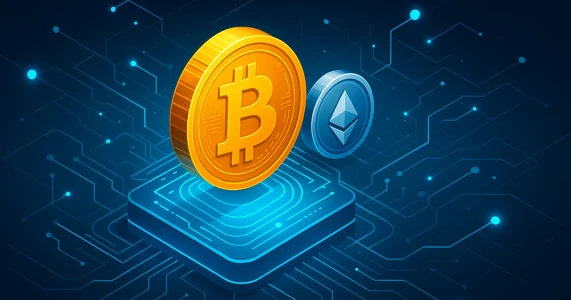
Image Source: © 2026 Krish Capital Pty. Ltd.
Highlights
- Bitcoin’s launch in 2009 marked the beginning of decentralised digital currencies.
- Ethereum expanded blockchain use cases with smart contracts, paving the way for decentralised finance (DeFi).
- Layer-2 networks like Polygon are addressing scalability and transaction costs, enabling mainstream adoption.
Digital assets have undergone a remarkable transformation since the debut of Bitcoin in 2009. What began as an experiment in peer-to-peer money has evolved into a multi-trillion-dollar ecosystem spanning cryptocurrencies, decentralised finance (DeFi), non-fungible tokens (NFTs), and blockchain infrastructure.
Bitcoin: The Pioneer of Digital Currency
Bitcoin (BTC) was introduced as the first decentralised digital currency, designed to provide a trustless and borderless way to transfer value. Bitcoin operates on a peer-to-peer network without the need for central authorities or banks, with transactions and issuance managed collectively by participants. As an open-source system, its design is transparent, with no single owner or controller, allowing anyone to take part. Bitcoin enables use cases that traditional payment systems could not support, offering fast peer-to-peer transfers, global accessibility, and low transaction costs.
Ethereum: Smart Contracts and Programmable Finance
Ethereum, launched in 2015 by Vitalik Buterin, is a public blockchain that goes beyond Bitcoin’s digital cash system by introducing smart contracts. These open-source programs allow users to create digital assets and decentralized applications (dapps) that run globally without banks or intermediaries.
Ethereum’s ecosystem now includes stablecoins, NFTs, governance tokens, and dapps for finance, art, gaming, and social platforms—collectively known as “web3,” the next phase of the internet centered on ownership. Millions worldwide use Ethereum to manage billions in assets and conduct trillions in transactions each year, making it one of the most widely used blockchain networks.
The Rise of Layer-2 Networks
Polygon Labs is building a more open, secure, and user-driven internet through a suite of Layer-2 solutions that address Ethereum’s high fees and slow transaction speeds while preserving its security and decentralisation. Its network of open-source protocols—including Polygon PoS, zkEVM, Miden, and CDK—provides scalable, interoperable, and efficient transaction processing for developers and users worldwide. Using a Proof-of-Stake mechanism and cryptographic ZK proofs, Polygon secures transactions, rewards validators, and maintains network integrity. Validators also implement Polygon Improvement Proposals (PIPs), ensuring community-driven governance and ongoing development across the Polygon ecosystem.
The progression from Bitcoin’s digital money to Ethereum’s programmable finance and now to Layer-2 scalability reflects a broader trend of continuous innovation.
Disclaimer
Investing in crypto assets carries significant risk, including potential loss of capital, extreme price volatility, limited regulatory protections, and rapidly changing market conditions. Crypto assets may not be suitable for all investors. Kovus Fintech Solutions Pvt Ltd does not promote, endorse, or suggest the purchase of any cryptocurrency or digital asset mentioned in this article. This article is for general information purposes only and does not consider your personal objectives, financial situation, or needs. Nothing contained herein should be treated as financial advice, investment advice, or a recommendation to buy, sell, or deal in any financial product or crypto asset.
Cryptocurrencies, virtual digital assets, and related tokens are not recognised as legal tender in India. This article may include sponsored content. Sponsored material has been provided or supported by the sponsor; however, all information remains general in nature and should not be interpreted as an endorsement.