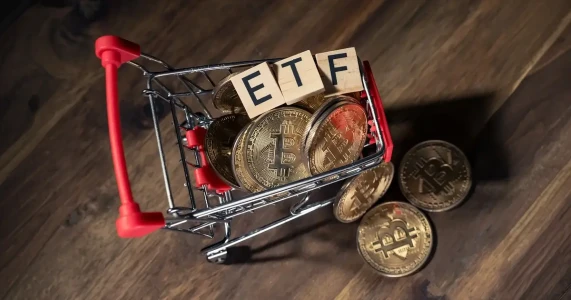
Crypto ETFs: Simplifying Digital Asset Exposure for Traditional Markets
Image Source: © 2026 Krish Capital Pty. Ltd.
Highlights
- Crypto ETFs provide regulated access to Bitcoin, Ethereum, and blockchain-related companies without holding digital assets directly.
- Futures-based ETFs track cryptocurrency contracts, while spot ETFs hold the actual assets for closer price correlation.
- ETFs offer liquidity, transparency, and convenience via traditional brokerage accounts, bypassing wallets and exchanges.
- Market volatility and evolving regulations present ongoing risks, making understanding ETF structure essential for participants.
Cryptocurrency Exchange-Traded Funds (ETFs) have emerged as a significant development in modern investing, offering a bridge between the digital asset world and conventional financial markets. These funds offer exposure to cryptocurrencies such as Bitcoin and Ethereum without directly holding the assets, removing the complexities of wallets, private keys, and exchanges.
A crypto ETF functions much like any other ETF. It trades on regulated exchanges and tracks the performance of an underlying index, cryptocurrency, or group of digital assets.
There are broadly two categories of crypto ETFs: futures-based ETFs and spot ETFs. Futures-based ETFs, such as the ProShares Bitcoin Strategy ETF in the United States, track futures contracts linked to Bitcoin rather than the asset itself. These products can face challenges such as contract rollover costs, which may lead to deviations from spot market prices. Spot ETFs, on the other hand, are designed to hold the actual cryptocurrency, providing more direct price tracking.
1. ProShares Bitcoin ETF (BITO)
The ProShares Bitcoin Strategy ETF (BITO) offers U.S. market participants regulated exposure to Bitcoin through futures contracts. As the first bitcoin-linked ETF, BITO provides accessibility, liquidity, and transparency via brokerage accounts, though it does not hold bitcoin directly and may not fully match bitcoin’s performance.
2. iShares Bitcoin Trust ETF (IBIT)
The iShares Bitcoin Trust (IBIT) offers streamlined access to bitcoin through an exchange-traded format, reducing custody and tax complexities. As one of the most actively traded bitcoin products, IBIT combines liquidity with BlackRock’s asset management expertise and Coinbase Prime’s integrated custody technology for secure, efficient market participation.
3. iShares Ethereum Trust ETF (ETHA)
The iShares Ethereum Trust ETF (ETHA) provides access to Ethereum through a brokerage account, removing custody and reporting complexities. Combining convenience with BlackRock’s management expertise and Coinbase Prime’s integrated custody technology, ETHA offers a regulated pathway to Ethereum exposure while seeking to track its market performance.
4. Global X Blockchain ETF (BKCH)
The Global X Blockchain ETF (BKCH) seeks to provide investment results that correspond generally, before fees and expenses, to the price and yield performance of the Solactive Blockchain Index. The fund targets companies positioned to benefit from blockchain adoption, including digital asset mining, transactions, applications, hardware, and broader blockchain integration.
The growth of crypto ETFs is reshaping market participation. However, risks remain. Cryptocurrencies are inherently volatile, and ETF structures cannot eliminate underlying market swings. In addition, regulatory scrutiny continues to evolve, with potential shifts in policy or taxation that could impact fund performance. Liquidity, tracking accuracy, and management fees also play a role in shaping returns.
Despite these challenges, crypto ETFs represent an important milestone in the mainstream acceptance of digital assets. They expand choice, encourage regulated participation, and may serve as a gateway to broader adoption of blockchain-linked financial instruments. As global regulators refine their stance and market infrastructure matures, the role of crypto ETFs is likely to deepen, balancing innovation with protection.
Disclaimer
Investing in crypto assets carries significant risk, including potential loss of capital, extreme price volatility, limited regulatory protections, and rapidly changing market conditions. Crypto assets may not be suitable for all investors. Kovus Fintech Solutions Pvt Ltd does not promote, endorse, or suggest the purchase of any cryptocurrency or digital asset mentioned in this article. This article is for general information purposes only and does not consider your personal objectives, financial situation, or needs. Nothing contained herein should be treated as financial advice, investment advice, or a recommendation to buy, sell, or deal in any financial product or crypto asset.
Cryptocurrencies, virtual digital assets, and related tokens are not recognised as legal tender in India. This article may include sponsored content. Sponsored material has been provided or supported by the sponsor; however, all information remains general in nature and should not be interpreted as an endorsement.